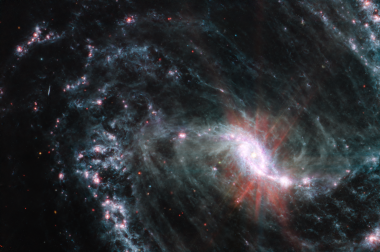
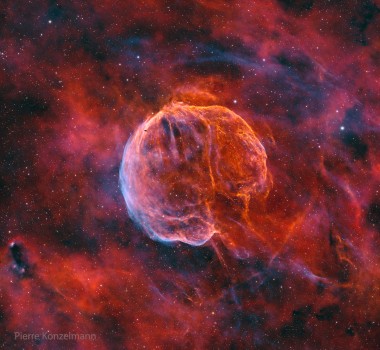
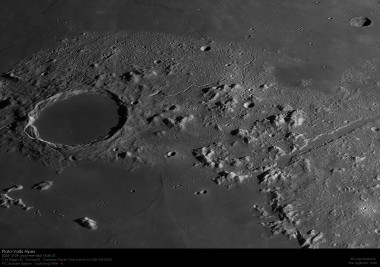
Hey everybody, I know it’s a little late, but I wasn’t really sure how the weather was going to be until a little while ago. I’d like to invite you all to join me in looking at the sky tonight. What’s on the menu:...
I know we did Fridays last time. The weather was bad, so I kinda forgot about it. The transparency tonight is looking suboptimal, and, given my options, I might just settle for hitting some binary stars. My best view is of the eastern sky, and most everything there right now is faint fuzzies, so I don’t have especially high...
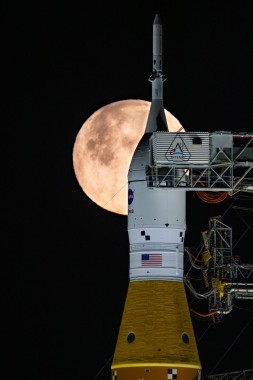
Engineers pushed through several challenges during the two-day test and met many of the planned objectives. To allow teams to review data and conduct a second wet dress rehearsal, NASA now will target March as the earliest possible launch opportunity for the flight test.
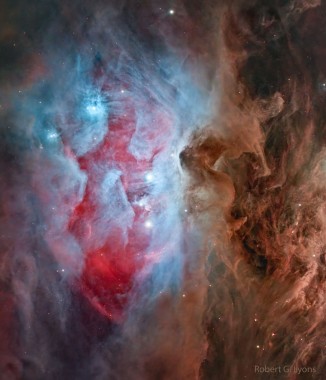
What part of Orion is this? Just north of the famous Orion Nebula is a picturesque star forming region in Orion’s Sword that contains a lot of intricate dust – some of which appears blue because it reflects the light of bright embedded stars. The region’s popular name is the Running Man Nebula because, looked at from the...
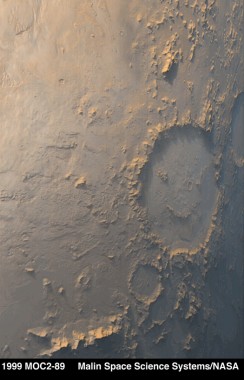
Mars has put on a happy face. The Martian crater Galle is famous because it has internal markings that make it look like a face that is both smiling and winking. These markings were originally discovered in the 1970s in pictures taken by the Viking Orbiter. The Mars Global Surveyor (MGS) spacecraft that orbited Mars from 1996 to...
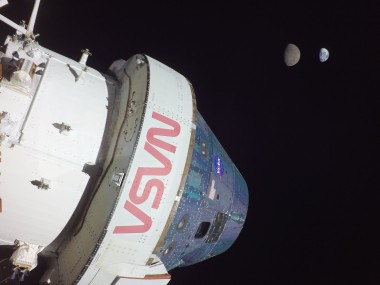
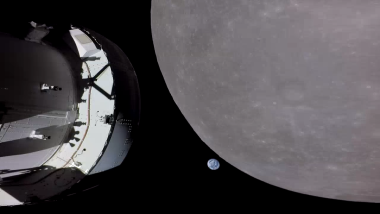
On flight day 13 (November 28, 2022) of the Artemis 1 mission, the Orion spacecraft reached its maximum distance from Earth. At over 430,000 kilometers from Earth, its distant retrograde orbit also puts Orion nearly 70,000 kilometers from the Moon. In the same field of view in this video frame from flight day 13, planet and...
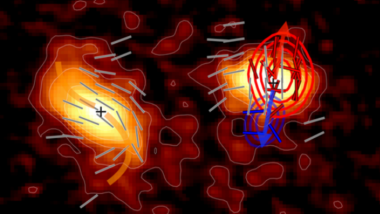
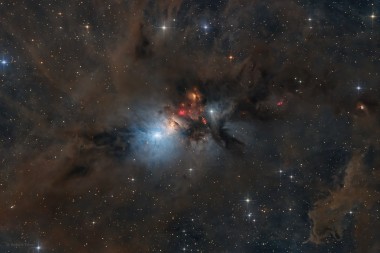
NGC 1333 is seen in visible light as a reflection nebula, dominated by bluish hues characteristic of starlight reflected by interstellar dust. A mere 1,000 light-years distant toward the heroic constellation Perseus, it lies at the edge of a large, star-forming molecular cloud. This telescopic close-up spans over two full moons...
Eight billion people are about to disappear in this snapshot from space taken on 2022 November 21. On the sixth day of the Artemis I mission, their home world is setting behind the Moon’s bright edge as viewed by an external camera on the outbound Orion spacecraft. Orion was headed for a powered flyby that took it to within...