OP: "This is my most advance moon photograph EVER it consist of 81000 images and over 708GB of data." (see comments.) angielski
From the other place: reddit.com/…/this_is_my_most_advance_moon_photogr…...
Magazyn ze zdalnego serwera może być niekompletny. Zobacz więcej na oryginalnej instancji.
From the other place: reddit.com/…/this_is_my_most_advance_moon_photogr…...

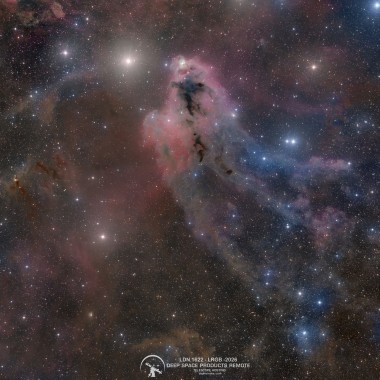
NGC 1333 is seen in visible light as a reflection nebula, dominated by bluish hues characteristic of starlight reflected by interstellar dust. A mere 1,000 light-years distant toward the heroic constellation Perseus, it lies at the edge of a large, star-forming molecular cloud. This telescopic close-up spans over two full moons...
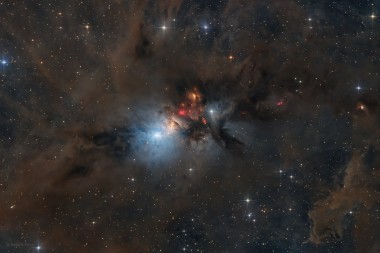
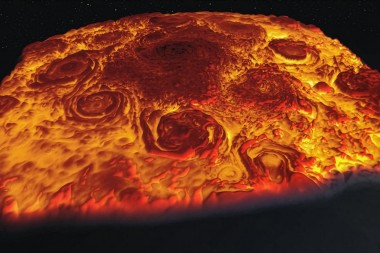
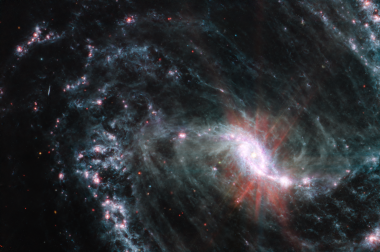
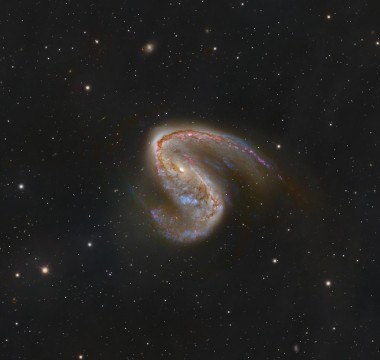
Distorted galaxy NGC 2442 can be found in the southern constellation of the flying fish, (Piscis) Volans. Located about 50 million light-years away, the galaxy’s two spiral arms extending from a pronounced central bar give it a hook-shaped appearance in this deep and colorful image, with foreground stars scattered across the...
In the vast Orion Molecular Cloud complex, several bright blue nebulas are particularly apparent. Pictured here in the center are two of the most prominent reflection nebulas - dust clouds lit by the reflecting light of bright embedded stars. The more famous nebula is M78, in the image center, cataloged over 200 years ago. To...
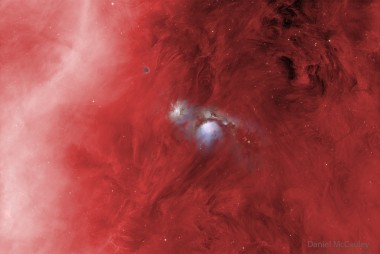
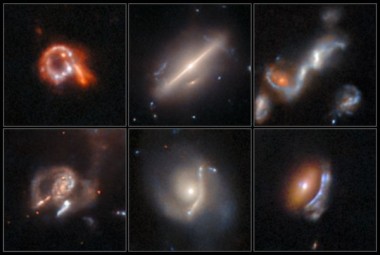
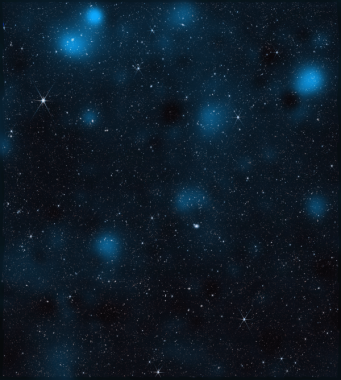
Image Credit & Copyright: Włodzimierz Bubak; Text: Ogetay Kayali (MTU)...
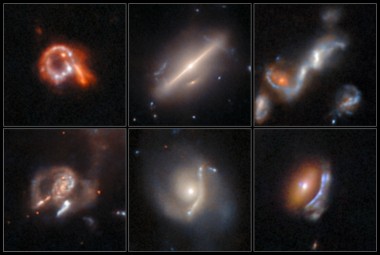
The algorithm started from regions in the early universe, with a mass distribution based on observations of the cosmic microwave background. With a powerful computer, the model then evolved to reproduce the present-day characteristics of the Local Group, with the mass, position and velocity of the Milky Way and the Andromeda...
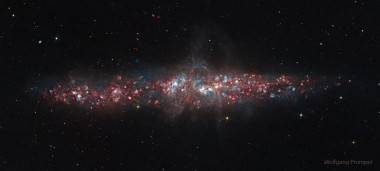
Image Credit & Copyright: Wolfgang Promper; Text: Ogetay Kayali (MTU)...
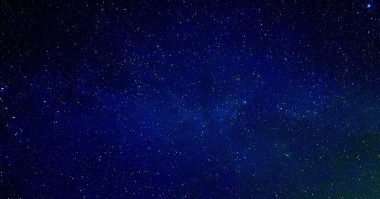
I forgot what settings I used but I used pro-photo mode and enhanced some settings such as brightness and contrast. I did not use any AI. This was before the big AI boom occurred. I just was lucky enough to get clear skies without any light pollution.
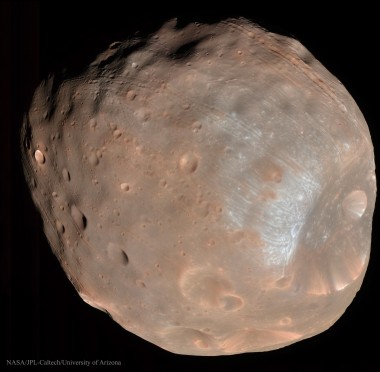
This moon is doomed. Mars, the red planet named for the Roman god of war, has two tiny moons, Phobos and Deimos, whose names are derived from the Greek for Fear and Panic. These Martian moons may well be captured asteroids originating in the main asteroid belt between Mars and Jupiter or perhaps from even more distant reaches of...
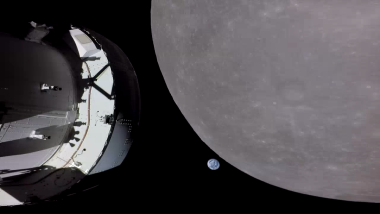
Eight billion people are about to disappear in this snapshot from space taken on 2022 November 21. On the sixth day of the Artemis I mission, their home world is setting behind the Moon’s bright edge as viewed by an external camera on the outbound Orion spacecraft. Orion was headed for a powered flyby that took it to within...
Very faint planetary nebula Abell 7 is about 1,800 light-years distant. It lies just south of Orion in planet Earth’s skies toward the constellation Lepus, The Hare. Posing with scattered Milky Way stars, its generally simple spherical shape about 8 light-years in diameter is revealed in this deep telescopic image. The...